 Germany
Did you know?
- •The Rhine is the busiest inland waterway in Europe — over 600 vessels cross the Dutch-German border daily, carrying two-thirds of all goods on European waterways.
- •Germany has more than 20,000 castles and castle ruins scattered across the country — one of the highest concentrations in Europe.
- •The Autobahn has sections with no speed limit, one of the few highway systems in the world to do so.
Key Information
Capital
Berlin
Population
83.5 million
Area
357,114 km²
GDP
5.3 trillion $
Currency
EUR
Difficulty on MapGuesser
Very easy
Subregion
Western Europe
Calling code
+49
MapGuesser Tip
Germany looks like an irregular rectangle that widens toward the south (Bavaria), with the North Sea and Baltic Sea coasts at the top.
Official Languages
German
Flag Colors
noirrougeor
Flag History
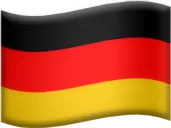
The national flag of Germany is a tricolour consisting of three equal horizontal bands displaying the national colours of Germany: black, red, and gold. The flag was first sighted in 1848 in the German Confederation. The flag was also used by the German Empire from 1848 to 1849. It was officially adopted as the national flag of the German Reich from 1919 to 1933, and has been in use since its reintroduction in the Federal Republic of Germany in 1949.
Learn more on WikipediaNeighboring countries
Germany shares its borders with 9 countries.