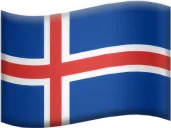
 Islanda
Lo sapevi?
- •L'Islanda si trova sulla Dorsale Medio Atlantica, il che la rende uno dei luoghi più vulcanicamente attivi sulla Terra.
- •L'Islanda non ha un esercito, una marina o un'aeronautica — è difesa dalla NATO e da una guardia costiera.
- •Circa l'85% dell'energia dell'Islanda proviene da fonti rinnovabili, principalmente geotermica e idroelettrica.
Informazioni chiave
Capitale
Reykjavik
Popolazione
395.050
Area
103.000 km²
PIL
43,4 miliardi $
Valuta
ISK
Difficoltà su MapGuesser
Facile
Sottore-gione
Northern Europe
Prefisso
+354
Consiglio MapGuesser
L'Islanda è l'isola poco sotto il Circolo Artico nell'Atlantico settentrionale — tra la Groenlandia e la Norvegia.
Lingue ufficiali
Icelandic
Colori della bandiera
bleublancrouge
Storia della bandiera
The flag of Iceland is defined in Law No. 34/1944, adopted on 17 June 1944, the day Iceland became a republic. The law, entitled The Law of the National Flag of Icelanders and the State Arms, describes the flag as follows:The civil national flag of Icelanders is sky-blue with a snow-white cross and a fiery-red cross inside the white cross. The arms of the crosses extend to the edges of the flag and their width is 2⁄9, and the red cross 1⁄9 of the width of the flag. The blue sections are rectangl...
Scopri di più su WikipediaPaesi vicini
Islanda è uno Stato insulare senza confini terrestri.